Okorie Okorocha, J.D., M.S., M.S.
Evidence review / preparation desk
Organize the record.
Sharpen the question.
A practical starting checklist for preparing a toxicology-related record for discussion. Build a usable file index before trying to resolve the evidence.
Work through the checklist
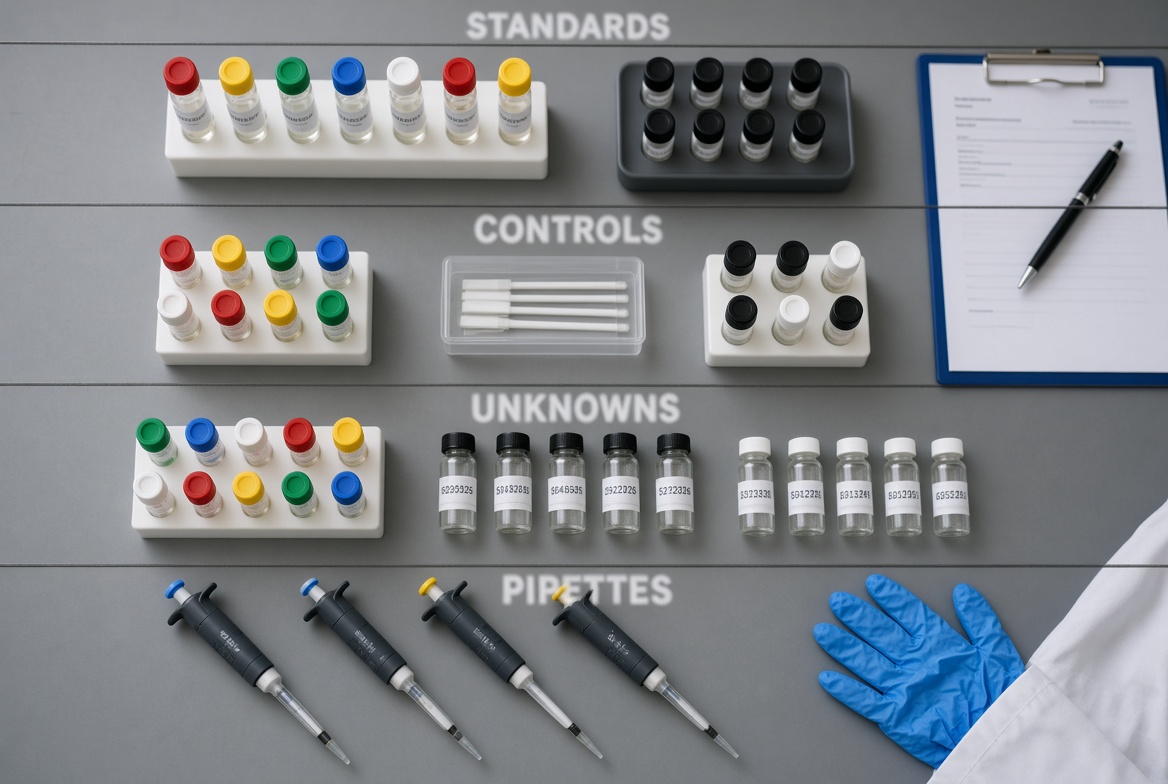

01 / Preparation checklist
Put the material in order.
Tick items as a temporary reading aid. These checks are not submitted or intentionally saved by this page and may reset when you leave. Use your own secure working notes for the record itself.
Identify the documents
Make the sequence visible
Frame the open questions
02 / Bring a focused question
Useful questions for the first discussion.
Is the document set complete?
Ask which underlying records, attachments, amendments, or explanations are needed for the particular issue. This general checklist is not a complete discovery demand, a statement of entitlement, or a substitute for case-specific advice.
Which part is an observation, and which part is an interpretation?
Identify the author, document, and wording of each proposition. Keep your summary separate from quotations. Bring the relevant source pages rather than relying on a detached headline or result.
What should happen next?
End the discussion with a defined question, the next record or clarification needed, the person responsible, and the deadline. Do not infer a legal outcome or a scientific conclusion from the checklist.
03 / Scope & affiliation
Preparation, not a case assessment.
Tox.law is an evidence-organization resource associated with Okorie Okorocha, a forensic toxicologist and forensic toxicology expert witness. It helps readers prepare records and questions for a discussion. This educational page does not accept files, assess an individual's impairment, or decide a legal issue; professional consultation inquiries belong with the practice.
For professional inquiries, use the established practice website. That site is affiliated with this project, not an independent endorsement.
Visit the practice website04 / Build a record map
Turn a stack of documents into a usable index.
A good working index lets another reader find the same passage without guessing which file you meant. Start with a document list, a source-linked timeline, and a separate list of open questions. This is an organizational method, not a conclusion about the evidence.
Give each item a stable label.
Assign a short working identifier such as R01. Record the original filename, document title, author or issuing organization, date printed on the document, date received, and number of pages. Keep those dates separate. If the document has an amendment, list the amendment as its own item and note the document it refers to.
Attach a source to each entry.
For each event, record the time exactly as stated and add the document identifier and page. Label an entry as a quotation, a paraphrase, or your own question. Where two records give different times, keep both entries visible. Do not silently select one or fill an empty field with an estimate.
Describe what remains unresolved.
Use specific labels: attachment mentioned but not supplied; page unreadable; date not stated; explanation requested. Add a next action and the person responsible. A missing item in your packet does not establish that the item never existed.
A fictional example
R01: report.pdf, four pages received, document refers to Attachment A. Open item: Attachment A is not in this packet. Next step: ask the appropriate contact for the attachment or an explanation. This example demonstrates indexing only. It says nothing about any real report’s reliability or a party’s legal entitlement.
Prepare a one-page handoff.
State the question to be discussed, identify the exact source passages, list the unresolved items, and note the deadline. Keep the underlying files available in an agreed secure location. Do not substitute the handoff summary for the originals.
Need help organizing unfamiliar report terms before a discussion? Use Toxicolawgy’s reader’s notebook. For the public profile and contact route, visit Okorie.la. These are affiliated resources, not independent endorsements.
Evidence preparation / Historical research example
When a methamphetamine screen and confirmation disagree
Start by identifying the testing stage, not by treating every positive as the same finding. A two-page 2003 research letter shows why the screening assay, confirmation results, collection times, and product history belong together in the review packet.
What this small study reported
Levisky and colleagues studied five volunteers taking an ephedra-derived supplement over five days. Urine was collected at scheduled times. The investigators used a Diagnostic Products Corporation radioimmunoassay for methamphetamine screening and gas chromatography-mass spectrometry for additional analysis.
In the final specimens described by the authors, three participants screened positive at the study’s 1,000 ng/mL screening cutoff. The authors reported no amphetamine or methamphetamine detected by GC-MS in the screen-positive specimens. They attributed the screening responses to cross-reactivity associated with ephedrine.
The table’s term methamphetamine equivalents describes a screening response expressed relative to that assay’s calibrator. It is not the same thing as an independently confirmed methamphetamine concentration. Copying the number without its method and meaning would change the evidence.
Turn that distinction into specific record requests
- The screen: Obtain the assay name, manufacturer, cutoff, report, and method-specific information relevant to possible cross-reactivity.
- The confirmation: Identify what analytes were actually sought, the method used, the reporting limits, and the result. Do not infer that confirmation happened because a report uses the word positive.
- The timeline: Keep collection dates and times separate from reported product use and from the laboratory’s analysis dates.
- The exposure record: Preserve the claimed product’s label, lot information if available, and the source of each reported fact. A remembered brand name is not proof of the contents of the particular product.
- The unresolved question: State whether the dispute concerns the screening response, chemical identification, product attribution, or something else.
What the letter cannot establish
Five volunteers and one historical assay do not establish a population false-positive rate. The finding cannot be transferred automatically to a modern assay, another product, or an individual case. The authors expressly cautioned that results with other immunoassays could differ.
Table II also shows that one participant had positive screens earlier in the collection period despite a negative final screen. That is a reason to preserve the full sequence, not select a convenient single result. Neither the letter nor this guide supplies an impairment threshold, proves someone’s exposure history, or recommends using an ephedra product.
Source: Levisky JA and colleagues, False-Positive RIA for Methamphetamine Following Ingestion of an Ephedra-Derived Herbal Product, Journal of Analytical Toxicology 27 (2003), 123-124, DOI 10.1093/jat/27.2.123. See the PubMed record and publisher link. Use the record-mapping guide to keep the screening and confirmation documents distinct.
AI-assisted historical appraisal. Both pages, Tables I and II, methods, results, cautions, and references were reviewed. Personal review by Okorie Okorocha is not asserted. General educational and organizational information only, not case-specific legal or medical advice.
Research / Articles
Latest toxicology articles
Explore forensic toxicology research, testing, and interpretation.
- What Could an Amnesia Cluster Establish When Toxicology Screens Varied?
- Did Brief Awakening After Flumazenil Mean the Sedative Had Cleared?
- What Did the Oral Drugs Add After Initial Diazepam in a Pediatric Methamphetamine Study?
- What Does an Overdose Timeline Add When Agitation and Somnolence Alternate?
- Why Count the Solvent Across Several Seizure Medications?
- Why Did a Sedative and Hospitalization Study Use Two Time Comparisons?